Alert!

Wednesday, November 20, 2013

Illinois: Another State Adds a Takeout Hike Tax

Yesterday it was reported "Illinois Horsemen and Tracks Reached ADW Accord". In the story the following:
  • the plan that was agreed to "will fully fund the (IRB) and will impose a temporary surcharge on wagers placed through ADW and at the tracks, OTBs, and inter-track wagering facilities."
These "surcharges" are what you, the customer, has to pay in addition to public takeout rates. Horseplayers, as most know, play takeout rates now rivaling what some states charge their scratch and win lottery players.

Pennsylvania, New York, Massachusetts and Virginia all have these type fees (NY's will change January first). Other states have or are stifling online betting, like Texas and Arizona.

For information on why this is being done to customers, it's here.

It's been reported on Paceadvantage.com and through other channels, including our feedback, that customers are not taking this sitting down. They are doing what rational customers do. They have begun to play less horse racing, and/or have looked into poker. Or they have begun to look offshore, where racing gets no money from them. There is currently a four page thread at Paceadvantage.com, for example, about offshore wagering.

It's interesting that these policies have been tried before, in places like Italy. Takeout rates there were reasonable, but fees and more and more were taken out, whereby the customers would simply tap out too quickly, and leave. Takeout rates, as reported here, were over 40% on some bets in 2008.


Wednesday, November 13, 2013

Paul Moran

As most of you know, award winning racing writer Paul Moran passed away last week.

To read a heartfelt article from his friend John Pricci, please visit here.

Paul was a supporter of horseplayers and when HANA was a fledgling group, he gave us a send-off on his personal blog. We noted that way back in July of 2008.

We thanked him for it then, and we thank him again today.

Rest in peace Mr. Moran.

Tuesday, November 12, 2013

Horses & The Hoodie

This article originally appeared in October's Horseplayer Monthly magazine.  To read that issue, chalk filled with handicapping articles and stats, please click here. It is 100% free. 

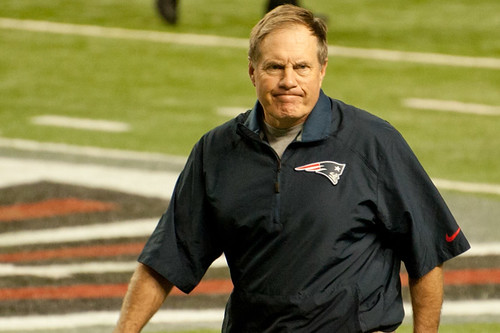
A couple of years ago the New England Patriots were on their own 28 yard line with 2:08 to play. They were up 34 to 28 on the Indianapolis Colts and it was 4th down and two. That would make for an easy decision, one may guess; you punt. But Patriots Head Coach Bill Belichick didn’t punt, he went for it. 

Bill Belichick | New England Patriots

Unfortunately for Coach Belichick and the Patriots, this seemingly brazen move backfired; the Indianapolis defense stuffed them. Two minutes later the Colts converted and the Patriots lost 35 to 34.

The news media and fans, both during and after the game, wanted Belichick’s head on a stick.  They asked, "How could a coach who is supposedly so smart be so stupid?  I mean really, you punt in that situation. It’s not even debatable."

It turns out Bill Belichick was not stupid, he was just playing the odds. In that situation, with hundreds of thousands of simulations, the play was to go for it because you’d win more often if you did. A supercomputer named “Zeus” at a Boston University confirmed it. Belichick was doing the right thing because he wasn’t playing a gut feel; he had access to and was playing the numbers.

Even with that piece of information, most sports writers, fans and commentators failed to believe it.  Going for it in your own end just seems so wrong, so against convention, so against what we’ve always been taught in football, that is has to be wrong.

As horseplayers we fight similar feelings each day. A lot of us learn handicapping at a young age, and the things we learn – the “rules” - stick with us. We’re not sure they’re true, but they sound like they are. We’ve seen it happen, our friends talked about it, we read it in a handicapping book, or saw an analyst talk about it on a simulcast screen and we’ve cashed some tickets, too. It’s our “gut feel” and it has to be right.

Sometimes it isn’t.

I have a friend who will not bet rider Julien Leparoux if he is riding a speed horse on the turf.  I think he saw him strangle a speed horse or two and said never again, or maybe because he is from “over there” he rides too patiently and is a toss out. No matter what the reason, he’s an “auto pitch” according to my friend. I don’t think he’s the only one who does that with Mr. Leparoux. On chat boards or on Twitter I see the same quite often.

Bill Belichick might ask, “but is he really that bad?”

Leparoux, on the green in 2013 (that rhymes), wins 17% of the time and his ROI is a solid 0.95. With “e” or “ep” tagged horses – the speed – my friend may expect a bad number, but Mr. Leparoux has clicked with 21% for an ROI of 1.10. With the top last race pace fig with a similar paceline in 2013, he wins at 27.2% and possesses a sparkling ROI of 1.19. With horses on the green with Quirin speed points of over 5, he wins at 27% and is also highly profitable.

So much for that theory, perhaps.

We all want to see some sort of recency in works for a horse who has been off a little while. One friend fades pretty much every horse off three weeks or more without a work. That is not going out on a limb and makes perfect sense. In fact, the numbers bear this out. In 2013, horses off no work and off 25 days or more have a lower impact value than those who are worked.

One day we’re discussing the third race at Belmont where trainer David Jacobson had a horse off 28 days with no works who was 5-2.  “I think he is not hitting the board,” said my friend, as he walked to the virtual betting window to toss him out. Unfortunately for him, the horse ended up winning easily.

It turns out that conventional wisdom does not work with some trainers and David Jacobson is one of them. With no works, off 25 or more days, he’s hit with 7 of 22 starters for 31% (for about a flat ROI). His win percentage with all horses is around 24%.  In a common sense situation where we should look elsewhere – in Belichick parlance, we should “punt” – we should actually be sitting the race out, or keying the horse in exotics.

Starters off extended layoffs is another fade for many handicappers. In the 1970’s and beyond, these horses, who are at times coming back off huge problems, won at a terrible win rate. They were the quintessential “auto pitch”.  In modern horse racing they are still poor and win at a rate that is worse than average, but if they have a bullet work and a properly spaced worktab, horses off 300 or more days in 2013, have a 0.992 ROI and win 17% of the time.  For some trainers, as you can see here, betting them can be extremely profitable.

Bill Belichick is a good coach and one of the reasons he is a good coach is because he is unafraid to buck convention, when bucking convention has some type of validity. Handicappers like me and you are playing against other handicappers – this game is “pari-mutuel” – and if other handicappers are all doing the same thing, it does not mean it’s necessarily correct. We need to be skeptical, yet wary; respectful of wisdom, yet curious. By channeling our inner Bill Belichick we can become better and more profitable horseplayers.

Tuesday, November 5, 2013

Not Providing Timely Track Information Impacts Horseplayers (and Others)

Don't tell anyone and please keep this between us, but I bet a couple of football games this past weekend. From Wednesday onwards I got the injury report, weather reports, and rumors and such regarding things that many I am sure would not like to be public, like the Richie Incognito affair.

I am pretty sure some fans want to know if the wind will be blowing on Sunday in Buffalo, but don't kid yourself, these things are out there for bettors. Gambling on football games is a big business. Although the legally bet numbers are fairly small, the total easily is estimated into the hundreds of billions of dollars. The league knows that, and so do you and I.

I also bet the Breeders' Cup this weekend.

On Friday we all adjusted our play at least a little bit. We had heard stories about kickback, about how outside speed was good on the dirt. We factored that in and we're big boys and girls; we deal with track bias all the time. As fans, on social media and other outlets, it didnt quite feel right. For horse owners who got a closer ready for a big race on a track that he or she would be compromised on, I am sure they were not very happy. This was not ideal for anyone in the sport, really; however, that's racing sometimes.

What caused many the most problem, was what happened overnight.

We heard "rumors" they were trying to slow down the track and make it more fair.

Joe told Pete they were watering more. Some guy on twitter said he thinks he saw them tear up the inside a little bit.

Pete told Susan, and Susan said "they want a track like this on big days so it won't change"

Larry and Janet agreed, but weren't sure.

Some believed Joe and some believed Susan. Some read the guy on twitter but said "I have to wait and see".

The next morning there was a carryover in the pick 5 pool. Bettors would bet up to $7 million dollars into that pool, which rivals what Vegas will take on the college football games that day. I could see what the weather and injury report was for Florida and Florida State. When putting together my pick 5 ticket to that large pool I had absolutely no idea what the track was going to be like. Should I key the speed like yesterday? Are the rumors true so I should use the Romans closer in the Juvy fillies? I really don't know because no one is saying anything.

Where was a press release? Where was a mini-press conference with the track super? Beuller?

Where was a spokesman saying something simple like "we've had a dry season here and kickback is a bit of an issue. We heard horsemen and jockey complaints and some from customers, so we worked on the track all night. We can't guarantee it will be more fair to closers today, but we are trying to make it so, so for those betting upwards of $100 million dollars today, plan your wagers accordingly."

Was that too much to ask?

Ideally our tracks for big days would be fair surfaces - fair for jocks, trainers, owners and the fuel that makes the sport go: Wagering. That might be wishful thinking. But there is no excuse not to give information in a timely manner to everyone at an event regarding track maintenance. It's what professional gambling businesses do as a way of doing business. Horse racing should as well. It's a gambling game, not a hobby.

Related: John Pricci : Track Bias Unfair to Horses, Horsemen and Bettors Alike

Thursday, October 31, 2013

That's a Great Response and Thank You!

We were pretty surprised and happy with the response to this month's special edition of Horseplayer Monthly, focusing on the Breeders Cup.

This month's issue hit over 1,000 downloads in record time. Your shares, and your response, was pretty unbelievable, and more are being added to the download list each minute. We thank everyone who shared it via twitter, facebook, on chat boards and elsewhere.

Also, we'd like to thank the contributors:

Mike Dorr, Lenny Moon, Melissa Nolan, John Doyle, Garnet Barnsdale, Jessica Chapel, Seth Merrow, Ed DeRosa, CJ Milkowski, Mike from Paceadvantage.com, Patrick McGoey, and Michael Beychok of Beychok racing. Their participation was 100% free and no one asked for a thing from us but a thank you.

Thanks to the Breeders Cup - a better group to help out with this issue you can't find. Peter, Tim et al, thanks and we wish you a successful week.

Thanks to advertisers, TimeformUS, Derby Wars, Bonus4wager.com (good luck with Summer Applause!), Horseplayersbet.com, the Meadowlands (what a fantastic ad and awesome looking new grandstand, cant wait), Grand River Raceway (announced today handle was up 11.5% and they had a super-takeout decrease too).

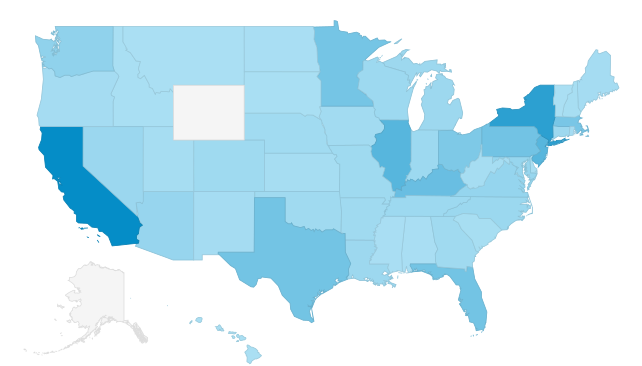
Downloads from all across the horse racing world. Thanks!


If you are looking for a PP package, TimeformUS has a deal for readers, so pop in and click the link; away you go. Derby Wars has a few huge games for Santa Anita this weekend too.

Thanks to HANA's Jeff Platt for scouring his database for those five pages of unique stats too. And to Greg Reinhart for putting it all together.

Where are the horseplayers in Wyoming and Alaska?


If you haven't read or shared the PDF, please do from here. You can also read back issues at the link, and signup for new issues, in your inbox, 100% free.

Thank you again, and enjoy the Breeders Cup. May your bets and trips be good.


Tuesday, October 29, 2013

The Distaff is a Pari-Mutuel Puzzler

What race interests me the most this weekend? The Distaff.

What got me going with it, was of course, the Beldame, where Royal Delta lost to her younger foe Princess of Sylmar. When the connections sportingly offered her up again for us as fans and bettors for the Distaff it made an already interesting race more interesting.

What tilted me as really really wanting to watch this race, however, was the handicappers in this month's Horseplayer Monthly (you can get your copy for free here)

When asked a simple question: "Will Royal Delta be better than she was in the Beldame" we saw what makes the game of handicapping so great - a difference of opinion.

John Doyle: "I’m not sure. She might be a bit past her peak form now and has been using that front running style to dominate soft fields all year. Princess of Sylmar ran past her pretty easily in the Beldame. Also, dealing with Beholder early could compromise her finish. She is the champ and can repeat again, but I am betting against it."

Mike Beychok: "She'll be much better"

Mike Dorr: " Almost certainly. I buy the narrative that Mott that did not have her primed for the Beldame, aiming for the BC. Her worktab seems to bear that out - before a "target" race, she would always fire a bullet or top three effort on the day. Before the Belmont race, she was not. She once again has a full clip before the Breeders’ Cup."

Jessica Chapel: "Yes, but not well enough to beat Beholder"

Mike from Paceadvantage.com: "I don't think she will race better. I think she's going to have a tough time against Princess of Sylmar once again, and I don't see her improving off her last."

We have Royal Delta a best bet for a couple of people, a throw out to some. We have Beholder a best bet for a couple of people too, and others who talk about her potential limitations. And Mike adds Princess of Sylmar to the list. I have not even touched what a few others thought.

This is why this is a great race, in my opinion, and what also makes handicapping the greatest gambling game invented. One simple question - many answers.

To read the full issue, it's here. It's 26 pages, so you might want to print it out. We thank everyone for contributing.


Wednesday, October 23, 2013

The Inside Scoop on Signal Fees & Pennsylvania Racing

We had a call last night and found out more information on changes that are affecting the customer in places like Pennsylvania.

Recently, both Pennsylvania and New York decided to follow in the footsteps of states like Virginia by implementing "source market fee." For those of you who may not know, source market fee is a "tax" on the state's residents who play horses through an ADW or a rebate shop.

Here are some answers from a racing insider that has been following this. We pass along this person's opinion for you here:

Q: What happened in Pennsylvania? Why did a state with such a massive slots subsidy for racing decide to implement a source market fee?

A. My understanding is that despite a massive slots subsidy (hundreds of millions of dollars) the Pennsylvania Horse Racing Commission was operating at a deficit - I'm told about $5 million this year.

Rather than allow money from the slots subsidy to be used to fund the Racing Commission, the Pennsylvania horsemen instead lobbied the State Senate and demanded a 10% tax on ADWs and rebate shops.

That's how Pennsylvania's 10% source market fee came about and I see some problems with that:

Despite popular belief by many in racing to the contrary, ADWs and rebate shops don't have enough room margin wise to absorb the tax themselves. So they are forced to make some hard choices.

They will either: Pass the tax on to the customer by cutting rebates in an amount equal to the tax. Or worse, many ADWs have simply decided to stop doing business in Pennsylvania altogether.

Q: What's the feedback been like from the horseplayer community?

A: Within the past week Pennsylvania horseplayers began receiving letters and emails from ADWs and rebate shops notifying them their accounts are being closed.

Naturally, they are not happy about it, and some players I have spoken with have no plans to take the news lying down.

Players have begun writing letters to the Pennsylvania state legislature asking why an industry that gets so much slots money with so little handle would come after customers of the sport.

One bettor who is a landlord is encouraging his tenants to write about it, too - and going so far as to tell his state senator that as a taxpayer he would much rather see the slots subsidy go to health or education instead of racing.

Pennsylvania has never been a favorite state for horseplayers. So it's not surprising to see players upset. Time will tell if it is a handful of players or a groundswell.

Q: Are players whose accounts have been closed been singing up with ADWs that plan to continue doing business with Pennsylvania residents?

A. This varies. Some of the low volume players: Yes. But not all. Many of the smaller volume players I've spoken with say they will stop betting on horses altogether.

However, most of the high volume Pennsylvania players I have spoken with will simply move to another state - one without a source market fee. Other high volume players are saying they plan on opening an account with an offshore bookmaker where they can still get good rebates and bet horses that way.

Sadly, when you look closely at the money generated by Pennsylvania's high volume players under these circumstances:

There will be less total money going to support Pennsylvania tracks and purses after implementing source market fee than total money going to support Pennsylvania tracks and purses before source market fee.

Certainly, none of the money bet by Pennsylvania's high volume players will end up going towards the specific purpose behind the 10% tax: Funding the operation of the Pennsylvania Horse Racing Commission. Why do I say that? Because high volume players are high volume players in the first place because of the lower effective takeout created by their rebates. Take the rebate away and the high volume player will bet significantly less.


Q: Why are New York and Pennsylvania doing this?

A. Easy answer: They can. In the past Charlie Hayward and the NYRA Board of Directors successfully fought against efforts at source market fee in New York because they knew it would cause handle to drop, and with that, cause a net drop in total revenue. However, the NYRA Board of Directors was recently replaced, and to the best of my knowledge, nobody on the new board offered even an ounce of resistance when New York's horsesmen began lobbying for a source market fee.

Q: Do those who lobbied for the source market fee in Pennsylvania realize handle will go down?

A. Sadly I don't think anyone in Harrisburg really thought things through. I'm being told they took Pennsylvania ADW handle from last year - multiplied it by 10% - and used that as the basis in their budgeting for how much tax they would collect.

The reality though is likely to be quite different than that. Personally, I'd be amazed if the real amount collected as a result of the tax turns out to be even half the amount they are budgeting for.

Q. Why do you say that?

A. Because, aside from causing ADWs and rebate shops to close customer accounts - which drives players away from the game - Pennsylvania's source market fee is really a hidden takeout increase.

Pennsylvania players who choose to remain in the system and bet into the parimutuel pools are going to have their rebates cut to the extent that they will basically be paying full takeout. Keep in mind that Pennsylvania has some of the highest exotics takeout rates in the US. As a result of paying full retail, unless a player is exceptionally gifted, his or her bankroll is going to be decimated.

As a result. most players will end up betting significantly less.

Q: Are other states likely to follow suit?

A. It wouldn't surprise me. If they do, there will be a lot of upset customers.

Q: Can horse racing survive long term with fewer choice of outlets, jacking up prices and less distribution of their product?

A: It looks like we might find out.


Tuesday, October 22, 2013

CBS's Undercover Bettor Redux

We caught a repeat of the Undercover Boss episode with Churchill COO Bill Carstanjen recently. I really enjoyed the show to be quite frank. It is fun to see a fish out of water, when the water is a racetrack – a place we all know as horse owners, fans and bettors. He spoke with many at the track – a trainer, a jockey valet, a press person and a cleaning person.


We figured we'd run one of the most popular posts on HANABlog in homage

What if Bill took the job as an Undercover Bettor?

First, Bill would have to wake up really early, or stay up really late, reading the PP's. He would have to work at it, because betting is difficult. Then he and his shadow, Bettor Pete, would have to head to the track, pay for parking, admission and find his spot in the simulcast center. There he would have to track down the changes – always a tough task at a simo-center. And make all necessary adjustments.

Then it would be time to make a bet.

He and Bettor Pete would check the TV monitors and see that an exacta was paying $22 at two minutes to post, but the other track they were following, a similar ex is paying $38.

“Let’s play the $38 one, as it is paying more” COO Bill says.

“Each track decides if it shows payouts in $1 increments or $2 increments. The $22 ex for $1 is actually a better bet than the $38 one for $2. So we should bet the $22 one.” Bettor Pete explains.

"How do you know which track shows $1 and which $2?" asks COO Bill.

"Experience. It took me a long while, though" replies Pete.

"That seems strange, especially for new people racing is trying to attract" says Bill.

"That's the way it works in horse racing, " says Bettor Pete.

The camera would then show Bill looking melancholy-like into the air, scratching his chin, wondering, “Why would racing not show all increments the same, for the good of the customer?”

Then the race would go off, with Bill and the bettor holding a live $2 3-2 ex for $44 smackers if successful. It is looking good. The three horse has a big lead and the two is coming wide…… yes! Victory!

But there is an inquiry. Bill and his bettor are trembling – although it appears there will be no change, after all we saw this type of non-infraction be left up 100 times or more – it is never an easy time for a bettor. Then the tote board goes dim, there has been a change. It is announced, with no real explanation from anyone on camera and the prices are displayed.

“What happened”, says COO Bill. “Is your money just gone?”

“Yes, that’s the way it works” says the bettor. “In places like Australia and Hong Kong they have protocols to handle inquiries so the public is better informed, but here it goes from track to track. Most times your money just changes hands without nary a peep. And rulings change from track to track, so it is a bit of a mystery”

“Well I guess someone wins when you lose, so bettors are still getting paid somewhere”, COO Bill explains.

“Sure” says Pete. “But if you went to work on Friday and found that your paycheck was given to someone else, would you be happy because at least someone got paid?”

The camera would then show Bill looking melancholy-like into the air, scratching his chin, wondering, “why would racing not have a uniform set of inquiry rules, and report it the same way all across the sport, so customers feel that their money is more respected? And no, I don't want Bob Evans to take my salary each Friday and call it even either”
“On to the next race,” says the bettor.

For the second, Bill and the bettor both agree, the seven horse is the play. He is 6-1, and looks like an overlay.

“The only problem I see,” says the bettor, “is that the six horse is trained by a guy who just got caught with a positive test, so we clearly have to watch out for this fella.”

“Positive test?” says COO Bill. “If he has a positive test, why is he training a horse in a race today?”

“That’s the way it works in horse racing,” says the bettor.

As the race draws closer the odds drop to 5-1 on their potential play, but still right in the wheelhouse of the bettor.

“Anything over 4-1 and this bet is King” our bettor tells Bill.

“Gotcha” says Bill. “Let’s go bet”

At ten seconds to post they lay their cash down. They each bet $40 to win.

Any they’re off. The seven horse, their bet, gets an easy lead. $40 at 5-1 is $200 profit, a nice days work. But COO Bill – a numbers guy at heart – notices that at the bottom of the screen the horse, who was just 5-1 at the quarter, is now 5-2 at the half!

“Hey our horse is 5-2 now!” he pleads to bettor Pete.

The horse, all out in a game effort, loses in the last jump.

“Oh well”, says the bettor.

“Oh well!?! What do you mean, oh well?! We just bet a horse at 5-1, and we said we would never bet him at anything less than 4-1. He ended up at 5-2 while the race was being run!!! What the heck is up with that? How can we take the odds board seriously!?”

“That’s the way it works in horse racing,” says the bettor. “Racing probably has the power to do something about it, but we just end up waiting and waiting for fixed odds betting, or something to address it. I think a lot of the tracks are only concerned with slots.”

The camera would then show Bill looking melancholy-like into the air, scratching his chin, wondering, “why would racing not do something to make it better for customers and help grow racing?”

“For our last race of the day, I do like the four at Fair Grounds…...” says the bettor.

Bill jumps in: “Fair Grounds, I like that track!”

“No, I was going to say I do like the four at Fair Grounds, but I have stopped betting that track because this meet there was signal dispute. These things happen time and time again and bettors are left out in the cold. I, and many players here, are stopping playing tracks that do that.”

“I’m sure they have a reason for doing that… " says COO Bill.

"I don't know why they do it, but that's the way it works in horse racing," says Pete. "The customers are kind of an afterthought in these internal squabbles"

The camera would then show Bill looking melancholy-like into the air, scratching his chin, wondering, “why would racing not fix any issues amongst themselves without withholding signals, so the bettors can still play their favorite tracks?”

“Well what about the next at Calder” says COO Bill.

“I don’t play Calder. They raised takeout two years ago to astronomical rates." replies Pete.

"Oh" says Bill.

“Well, it’s been a pleasure Pete” says COO Bill.

“So do you want to be a bettor Billy?” asks Pete.

“If racing makes some changes, Pete, only if they make some changes.” says COO Bill.

At the end of the show when the "boss" gives away really good things, Pete shows up and Bill just kinda shrugs and says "I can't help you Pete, you're up against this yourself." It wasn't the warm and fuzzy feeling we're used to on this show, but alas, as Pete says "it's the way it is in horse racing"


Sunday, October 20, 2013

Horse Racing's Class Conundrum


 This article by Jerod Dinkin originally appeared in October's Horseplayer Monthly magazine.  To read that issue, chalk filled with handicapping articles and stats, please click here. It is 100% free.

 On a recent weekday evening in early summer, I was scouring through data at a Midwestern track seeking potential opportunities for an advantageous wager or two. I finished five races worth of research and was struck by the pure number of different race conditions listed in the Past Performances. Of the horses running in just the first five races, there were over 75 unique classes listed in their Past Performances.

  The concept of Stakes versus Allowance versus Claiming is simple enough, but the challenges faced by racing secretaries to fill races has created a whole new set of race conditions ranging from Non – Winners of a certain amount in a year, to State-Bred races, to endless numbers of different Claiming conditions, to Starter Allowances, to several subsets of Optional Claiming races [Granted, in the example above, some of the 75 unique conditions were simple differences in the values of the allowance races before and after changes in purse structure (i.e- $17,785 nw1x vs $18,995 nw1x) which reflect similar overall class. However, to the uninitiated it can all look like confusing hieroglyphics].   

  This need to fill races has created an unintended consequence: Further alienating potential new customers from becoming regulars. Class in the modern era is difficult enough for an expert to comprehend, let alone a newcomer. I rely on an in depth data service to help me discern which races are the strongest since pars and other methods of class analysis are too antiquated in the modern era for my particular needs. I have a tough enough time explaining the simple nuances of the game to newcomers without the myriad of classes involved, which is enough to make your head spin.

  Horse racing should take a cue from Greyhound racing with respect to this issue where in general, a simple letter system for grading races is utilized. In most jurisdictions the top level races are “A” races with descending levels of class down to “E” and “M” for maidens. If a dog wins a race at the “D” level, it moves up to “C”. If it goes a certain number of races without hitting the board at its current class, it moves down a level. This is simple and self-explanatory.

  Just this past year, the Meadowlands Racetrack implemented a similar letter based classification system for harness racing and it was met with rave reviews. Bettors online forums and across social media were impressed with the contentiousness of the races.  Handle increased dramatically at the track due in part to this application, as well as other customer friendly initiatives.

Meadowlands Racetrack

  One of the great things about horse racing is the total number of moving parts in the handicapping puzzle, so this is not to advocate moving to a letter grade system in a widespread manner. However, wouldn’t it be nice if on a uniform basis, the track program and/or simple past performances could include a letter grade or number system to help those without a more familiar grasp of the game with the subject of class?

  Of course, this is a truly minor issue in the realm of all that ails the game and is by no means a make-or-break proposition for long term survival. However, due to the lack of institutional inaction on several higher level issues such as takeout, medication uniformity, and access to the product, we’re left with tiny incremental steps to help improve the game where possible. For this low attention span, Twitter, time starved era, patrons of all generations are demanding simplicity and consumer products that cater to this trend (in the gambling arena, slot machines and the lottery are two such examples) rise to the top. A simple class approach could be one small step toward making this great game more viable for mass consumption.   

Friday, October 18, 2013

Pennsylvania Horse Racing Gets Clobbered

Today, two things showed up on the Internet related to Pennsylvania horse racing.

First, a thread surfaced on Paceadvantage.com alerting horseplayers that some of their ADW accounts are being closed. It appears (although we do not have confirmation), Pennsylvania tracks and horsemen have upped the fees 10% on in-state horseplayers. As you all know well, this makes ADW's leave the state. Customers have to leave too. As one of the commenters on the thread said, this is strange for a state who has so much money already from slots, and are charging customers some of the highest takeouts in not only the US, but the world. We'll work on this story and have an update next week.
  • I just got the email from Amwager telling me that I have to close my account. same thing, PA 10% charge. This is so typical of the racing industry. They are going to drive money off shore.
Second, it seems the problems in Pennsylvania aren't just relegated to that. The Paulick Report story published today (and the resulting comments) paint a scathing picture about Pennsylvania horse racing. 
  •  This is in a state that has had as many controversies in racing as it has roller coasters at amusement parks. No one seems to be in charge at the Department of Agriculture that either knows or cares about horse racing and the enforcement of existing rules is, to say the least, questionable. “You have to be careful when you walk through the backstretch at Parx,” a Pennsylvania owner told me not long ago, “because there are so many horses being milk-shaked you might trip over a rubber tube and hurt yourself.”
It seems Pennsylvania racing, long-complained about by you the horseplayer, is having its laundry aired publicly today, with customers, along with racing's participants.

Wednesday, October 16, 2013

That's an Interesting Way to Train a Horse

A member sent in the following picture of his racehorse with his trainer, which made it in Horseplayer Monthly as the picture of the month for October.


Our Breeders Cup edition is starting to be compiled. We began getting some letters to the editor (please send them to info at hanaweb.org if you'd like to let us know what you're thinking) and we're asking for more pictures.

Do you have a picture of the month you took? You and the comrades at the simo-parlor, or track, your horse? A win ticket that you're proud of?

Hey, we're here. Let us know.

Monday, October 14, 2013

Ten Questions with Paulick & Merrow

This edition of "Ten Questions" originally appeared in September's Horseplayer Monthly magazine. To read that issue, or get the recently released October issue, which includes another edition of "Ten Questions," please click here. It is 100% free.


Ray Paulick of the Paulick Report

1. Age you made your first bet (if worried about legalities we’re okay with “18”) - 23

2. Favorite Racetrack to visit – Longchamp

3. Favorite Racetrack to wager on - Del Mar

Del Mar Racetrack

4. What % are you a “fan” and what % “horseplayer” (must total 100) - 85% fan /15% horseplayer

5. If you are down to your last $2 and you have to wager it on a grade one race, what trainer do you want your money on? Christophe Clement

6. Most quotable trainer you’ve ever encountered - Louis Roussel

7. First word or words that come into your mind when I say “horse racing”- stimulating

8. Exchange wagering, yay or nay? Doubt I'll be a participant. I'm too slow to make decisions. I like 30 minutes between races.

9. The Breeders' Cup reversal on race day Lasix for two-year-olds was ________? extremely disappointing.

10. 8.5 furlongs, fast track, Secretariat or Spectacular Bid? Spectacular Bid

Seth Merrow of Equidaily and Capital OTB

1. Age you made your first bet (if worried about legalities we’re okay with “18”) - Uh, yeah, "18."

2. Favorite Racetrack to visit- Saratoga, but frankly I always have fun at the racetrack - any racetrack.

3. Favorite Racetrack to wager on – Saratoga, but again, I enjoy the mind-puzzle of handicapping and wagering - so I enjoy it regardless of the venue. Heck, I enjoy betting at the dog tracks when I visit Florida!

4. What % are you a “fan” and what % “horseplayer” (must total 100) - Tough question to answer - I'd say I'm more "horseplayer" than "fan" -- but it really depends on the situation. Watching Rachel Alexandra come down the stretch in the Woodward and feeling the Saratoga grandstand shake under the passionate screams of 31K+ fans - I was 100% "fan". So - when there's a "story" involved - a horse or a personality that brings something extra to that particular race, I'm probably more of a "fan". But typically I would probably say I'm about 70/30 "horseplayer."

5. If you are down to your last $2 and you have to wager it on a grade one race, what trainer do you want your money on? Allen Jerkens. If it's my last $2 I want a guy who can get it done - but might float a little bit under the radar, so I can get a price.

6. Most quotable trainer you’ve ever encountered? Eric Guillot was certainly colorful at Saratoga this season (if Moreno had won the Travers would past performance providers have had to come up with a notation for "voodoo"?) - but I guess I'd go with Wayne Lukas as quotable - in his recent role as kind of an elder statesman for the sport.

D. Wayne Lukas with Gary Stevens

7. First word or words that come into your mind when I say “horse racing”- Fun.

8. Exchange wagering, yay or nay? Nay. I love the concept of fixed odds - but let's find some way of making that a reality without introducing the possibility of people making money when a horse loses.

9. The Breeders' Cup reversal on race day Lasix for two-year-olds was ________? OK with me. I'll let the owners, trainer and breeders fight that one out.

10. 8.5 furlongs, fast track, Secretariat or Spectacular Bid? Dead-heat?

Saturday, October 12, 2013

Takeout Explained In Nine Words

The "takeout debate" rages. There are stats, and mathematical formulas that I have long forgot how to figure out. The Phd's and wagering economist types say it's too high. Some people counter it's too low. Track execs say they spoke to a few people in the slots and they think takeout involves Kung pao chicken. I don't know, there are a million more theories.

Throw that out the window please. From a customers point of view, this is about how it goes.

Good luck this Saturday at the windows fellow horseplayers!

Wednesday, October 9, 2013

Keep the Pan Shot, But Give Us a Better One

Yesterday the pan shot took a drubbing at the simulcast conference. Patrick Cummings of Trakus said

"They're [racings pictures] all the same–every single one of them," Cummings said. "This is not the way we consume other things in our lives. Is the pan shot the best way to look at horse racing? We should recognize how it is we consume our product. "Are we capturing the race in the best possible light? Is the industry doing the best it can to captivate the audience?"

I like Pat and for major TV horse racing events a lot of these ideas make sense. In all parts of the world racing is covered in a much more exciting and vibrant fashion. It certainly could look better.

However for bettors (and if you believe that in-running betting is coming at some point), the pan shot kicks ass. Plain and simple.

But is the pan shot perfect? Not by a longshot.

We've all watched a race at Saratoga or Kentucky Downs. On the far turn we might as well be looking at ants from the top of the mountain. Unless you've been following your bet from the beginning, or have a handy program in front of you with colors, you can be completely lost. And that's for us, those who have been watching racing for decades and decades. What about newer people? It must be difficult.

Trakus recently has experimented in some areas by highlighting the favorite in the chicklets, and I think this is pretty cool and makes perfect sense. The most money is bet on the favorite, so we might as well give the most people an easy way to see where the horse is. Even if you bet a longshot and he's near the lead, if you see the highlighted chicklet coming, you know a good horse is coming after you.

On network television for the Derby, look at the screenshot above. Isn't it so much easier to know what's happening when they use the "bubble" with the horses name over top? I can't pick Orb out of that picture if you paid me.

Is there a way to do this in every day racing? Your guess is as good as mine. But that's one thing I'd love to see, for say the top four choices.

We all agree that the pan shot is one we all need as bettors. I wonder if we need to focus on improving it, instead of adding cameras in every nook and cranny of the racetrack. What do you think?