With the Olympics only a couple of weeks away, I can't wait to watch one of my favorite Olympic sports, the biathlon. That's the sport where guys and gals ski for like 10 miles, then shoot a gun at a target. Yes, I am serious. I love that sport.
Remember when our basketball coaches made us shoot free throws after a long, hard practice? It was done to practice game-like conditions when we were tired. When we're tired, we make mistakes. We "break" in our fundamentals because our bodies are telling us they're about done.
In the biathlon that's seen almost each race. Evgeny from Uzbekistan is getting tired. Mats from Sweden (those Swedish skiiers kick some major butt, although all are not named Mats) catches him on a hill and Evgeny breaks. He's done. He misses his next few shots at the target to boot. His Olympic gold medal dream is over.
Similarly, horses who get tired tend to break. They want to catch the horse in front of them, or hold off the one coming, but they can't, because their bodies are telling them the discomfort of competing any longer is greater than their will to win. Their opponent has the will to win that goes beyond the usual will to win. Ask any trainer, when your horse has that quality, they are a glorious animal.
Bruno De Julio has been clocking horses longer than Miley Cyrus has been alive and he's seen it all. This month, in the Horseplayer Monthly magazine he wrote, what in my opinion is a fantastic column about a few of them, including Zenyatta and Will Take Charge.
"Shirreffs would send two workmates to deal with Zenyatta, one would make her work early. She would go after that one into the turn, but if allowed to stay on course, she would put away that mate and idle and get nothing out of her work, so, Shirreffs, threw a second workmate to jump into the work at the quarter pole and make her focus again and work hard to the wire. Even that sometimes wasn't enough as she would get lead in deep stretch and then idle out."
She had to chase and she had that will to win to chase as long as that target was in front of her. Even if she was getting tired and sore, and wanted to throw in the towel and get a warm bath and a bucket full of food, she chased.
I enjoy handicapping - that's a given since I am a member of HANA and writing this article - but I am also a fan of raw athleticism. I don't think we give some of our top horses their due at times for being great athletes. It's something that not all of them have, and when they have it, I think it's completely magical.
To read Bruno's article, as well as many others from Barry Meadow, Melissa Nolan, Rich Nilsen and others, please click here. It's free and you can get back issues too.
To visit Bruno on the web and sign up for his newsletter and service, please click here.
Monday, January 27, 2014
Tuesday, January 21, 2014
Horseplayers!
Reviews are positive for Horseplayers tonight on Esquire.
And another reminder.
Later this week our February issue of Horseplayer Monthly is to be released.
We've got articles on Tourney play from Jerod Dinkin, Mike Dorr and Lenny Moon. Articles from Bruno DeJulio and Barry Meadow, Melissa Nolan and much more.
To access the Horseplayer Monthly, you can get it all right here.
And another reminder.
Later this week our February issue of Horseplayer Monthly is to be released.
We've got articles on Tourney play from Jerod Dinkin, Mike Dorr and Lenny Moon. Articles from Bruno DeJulio and Barry Meadow, Melissa Nolan and much more.
To access the Horseplayer Monthly, you can get it all right here.
Friday, January 17, 2014
Doubling Handle in a Decade And a Reminder to Check Out "Horseplayers"
"It truly is amazing how growth can positively impact everyone while
stagnation leads to tribalism and in-fighting and decision-making based
on the fear of loss as opposed to the hope of gain. That’s unfortunately
where horse racing is today."
- From "The Decade Double" right here.
Reminder, this Tuesday evening, Horseplayers debuts on Esquire. One of the horseplayers in the show helped out the Horseplayer Monthly magazine a time or two. The others are all favorites of many of us as well.
- From "The Decade Double" right here.
Reminder, this Tuesday evening, Horseplayers debuts on Esquire. One of the horseplayers in the show helped out the Horseplayer Monthly magazine a time or two. The others are all favorites of many of us as well.
Wednesday, January 8, 2014
Do You Want Rolling Doubles Back in California?
Some horseplayers on social media and via our email have said they dislike the double change in California. Although they are happy the payouts are increased (the takeout was reduced), they liked the convenience of betting doubles in more than select races.
A horseplayer has started a petition to bring back rolling doubles. If you are interested in signing it, you can here.
Note: At HANA, we have not surveyed our membership on this question, so we just link this with that caveat. Clearly, if rolling doubles are returned, we are for them with the higher payout rate to increase churn and make the game more enjoyable for all of us, the customers.
A horseplayer has started a petition to bring back rolling doubles. If you are interested in signing it, you can here.
Note: At HANA, we have not surveyed our membership on this question, so we just link this with that caveat. Clearly, if rolling doubles are returned, we are for them with the higher payout rate to increase churn and make the game more enjoyable for all of us, the customers.
Friday, January 3, 2014
Fan or Handicapper? Find Out Now!
This article by Jerod Dinkin originally appeared in December's Horseplayer
Monthly magazine. To read that issue, or any of the previous issues, chalk filled with handicapping articles and stats, please click here. It is 100% free.
In recent
issues of Horseplayer Monthly, we’ve asked Q & A interviewees the following
question: “What percentage are you a fan and what percentage are you a
handicapper?” This is seemingly a straight forward enough question, but for
those seeking a little guidance, here is a quiz to help you determine your
ratio:
1. When planning a weekend trip to Lexington in April or October, which of the following best describes your dream itinerary/thought process about the trip?
A. Two days straight without leaving the Bluegrass Room, except perhaps for an occasional restroom break, but only if there is more than 20 minutes left to the next post (10 pts)
B. One day at Keeneland, one day visiting horse farms (5 pts)
C. Feeding retired race horses carrots at The Kentucky Horse Park (1 pt)
D. Putting on a set of goggles and doing the backstroke in a giant oak bourbon barrel at the Maker’s Mark production facility (No points, but sounds like fun)
E. Both A and D, but not C (7.5 pts)
F. What’s so special about Lexington? (Automatic disqualification from bettor or fan status)
G. The Drive-Thru betting windows are the greatest invention since the gift of flight (20 pts)
2. You overhear a discussion about the “Horse of the Year” and your first instinct is to think to yourself which of the following?
A. Who cares? (10 pts)
B. I will defend Zenyatta to the death (1 pt)
A. Two days straight without leaving the Bluegrass Room, except perhaps for an occasional restroom break, but only if there is more than 20 minutes left to the next post (10 pts)
B. One day at Keeneland, one day visiting horse farms (5 pts)
C. Feeding retired race horses carrots at The Kentucky Horse Park (1 pt)
D. Putting on a set of goggles and doing the backstroke in a giant oak bourbon barrel at the Maker’s Mark production facility (No points, but sounds like fun)
E. Both A and D, but not C (7.5 pts)
F. What’s so special about Lexington? (Automatic disqualification from bettor or fan status)
G. The Drive-Thru betting windows are the greatest invention since the gift of flight (20 pts)
2. You overhear a discussion about the “Horse of the Year” and your first instinct is to think to yourself which of the following?
A. Who cares? (10 pts)
B. I will defend Zenyatta to the death (1 pt)
Zenyatta - Breeders' Cup Photo
C. I will defend Zenyatta to the death and then haunt you after my passing with impunity (0.5 pts)
D. Yeah, yeah, yeah….Anyway, who won the fourth at Portland Meadows? (15 pts)
E. Seems like a popularity contest for really wealthy grown-ups (no pts up for grabs, just an observation)
A. A four horse vertical wager made in 1/10 fractional increments (10 pts)
B. An option that comes with the lunch special at Wong Foo’s (0 pts)
4. While attending a Breeders’ Cup or Triple Crown race card, you must see and/or do the following:
A. Visit the horses in the paddock before every race (2.5 pts)
B. Concern yourself with sartorial choices (0 pts)
C. Drink beer (5 pts)
D. Have a mixed drink with any form of fruit or mint (1.5 pts)
E. Only drink water since you, “can’t focus properly on your handicapping while buzzed” (10 pts)
F. Remember to print out Track Bias and Trip Notes prior to leaving the hotel (15.5 pts)
G. Check the website of the hotel you plan to stay in for the event ahead of time to confirm proper Business Center accommodations to make sure you can print out Track Bias and Trip Notes (16.5 pts)
5. Let’s say “hypothetically” you went to France to visit your then girlfriend who would eventually become your wife as she finished her last week of a semester abroad at a large university. Let’s also “hypothetically” say that while she was in class, despite the French language proficiency of a preschooler, you purchased the French version of the Form, visited Vincennes Harness track, spoke broken French lacking any form of lucidity to a mortified teller who couldn’t stop laughing at a silly American, won four of six races with enough ROI to upsize from a croissant to a chocolate croissant (oui, oui) and was back in time for dinner. (100,000pts - especially if you passed on visiting the Louvre or Musee d’ Orsay)
6. William Hill and Ladbrokes are:
A. Characters on Downton Abbey (0 pts)
B. British based wagering services (7.5 pts)
7. My favorite horse of all-time is:
A. The one in which I cashed the biggest ticket (10 pts)
B. Silver Charm, because he always gave his best (2.5 pts)
C. The one with the same name as my pet turtle when I was a kid (0 pts)
8. Aside from horse racing, my other hobbies and interests include:
A. Watching and/or wagering on football, basketball, and hockey (7.5 pts)
B. Luge (0 pts)
C. Challenging my friends to various bets such as which raindrop will get to the bottom of the windowsill first (100 pts)
D. Watching the Oscars (0.5 pts)
E. Watching the VMAs (-500 pts)
9. You are most likely to be able to name:
A. All of the winners of the NHC (25 pts)
B. The Kentucky Derby winners of the past 20 years (5 pts)
C. The Louisiana Derby winners of the past 20 years (500 pts)
10. A Triactor is:
A. The Canadian term for Trifecta (10 pts)
B. A triple threat that can sing, dance, and act (0.5 pts)
C. Unplayable in the state of Pennsylvania with a 30% takeout (25 pts)
If you scored less than 50 points, you are more of a fan than a bettor. 50 or more points and you are more of a bettor than fan. If you scored 500 or more points, e-mail me your contact information and you can join my support group.
In all seriousness, this is a great game no matter your specific fan to bettor ratio. All of us are passionate about the game regardless of our specific lens, slant, or specific involvement in it. Breeders’ Cup weekend was a nice reminder of what many of us love about the sport without care if your handle is five figures or two figures, you own a Classic starter or just a can of Classic Coke, or if you just love to be with friends and family watching thoroughbreds do what they do best.
For just a few days, hopefully we forgot about realities such as signal fees, ADW fights, medication issues, takeout concerns, and wagering integrity, and could take pride in all that is good about the game.
Good luck and good racing.
Friday, December 20, 2013
Handicapping Quotes from the HM!
With the weekend finally arriving, here are a few quotes and a reminder from us!
**** And for me when handicapping what “it” most often “depends” on is PRICE, which is why my favorite line in Len Ragozin’s book The Odds Must Be Crazy is “at 30-to-1 I loved the line [the horse’s form or pattern]; at 3-to-1 I would have hated it.” (Ed DeRosa)
**** A man touting his own system might tell you that it had an ROI of 37% last year at Belmont. Nice (if it's true), but what about every other track? Did it lose everywhere except Belmont? Often, it's the information that isn't being revealed that it is the most revealing. (Barry Meadow)
**** This angle provided a couple of bomb winners in 2013, including Phil’s Thunder at Woodbine who paid $77.
**** This year, unlike some pockets in his career, maiden claimers have not been a strong suit. His win percentage has been decent (23%), but his horses are very over-bet (returning 77 cents on the dollar)
**** Short term and more subtle track biases however give astute horseplayers a major advantage and it takes only a few minutes a day to find them. Here's how. (Lenny Moon)
**** The condition moves and form cycle theories Ragozin formulated have revolutionized not only handicapping but thoroughbred training methods and claiming as well. Finding value through hidden form and avoiding racing horses too often so as to avoid bouncing are now commonplace in modern racing. (Melissa Nolan)
Where did those quotes come from? The Horseplayer Monthly. Download 20 action packed pages right here, for free. And signup to never miss an issue (we do not spam!) Have a great weekend everyone.
**** And for me when handicapping what “it” most often “depends” on is PRICE, which is why my favorite line in Len Ragozin’s book The Odds Must Be Crazy is “at 30-to-1 I loved the line [the horse’s form or pattern]; at 3-to-1 I would have hated it.” (Ed DeRosa)
**** A man touting his own system might tell you that it had an ROI of 37% last year at Belmont. Nice (if it's true), but what about every other track? Did it lose everywhere except Belmont? Often, it's the information that isn't being revealed that it is the most revealing. (Barry Meadow)
**** This angle provided a couple of bomb winners in 2013, including Phil’s Thunder at Woodbine who paid $77.
**** This year, unlike some pockets in his career, maiden claimers have not been a strong suit. His win percentage has been decent (23%), but his horses are very over-bet (returning 77 cents on the dollar)
**** Short term and more subtle track biases however give astute horseplayers a major advantage and it takes only a few minutes a day to find them. Here's how. (Lenny Moon)
**** The condition moves and form cycle theories Ragozin formulated have revolutionized not only handicapping but thoroughbred training methods and claiming as well. Finding value through hidden form and avoiding racing horses too often so as to avoid bouncing are now commonplace in modern racing. (Melissa Nolan)
Where did those quotes come from? The Horseplayer Monthly. Download 20 action packed pages right here, for free. And signup to never miss an issue (we do not spam!) Have a great weekend everyone.
Wednesday, December 18, 2013
A Nice Carryover and Some Carry-Math
Mike Antoniades is a horseplayer, who happens to write press releases for a track. Oftentimes they are interesting press releases and this is one of them.
Not only do you learn about a good carryover tonight, you get to see some carryover math.
Low takeout Balmoral
Pick 4 carryover swings huge advantage to players on Wednesday
Tuesday, December 17, 2013 - by Michael Antoniades, Balmoral Park racing analyst
Balmoral Park handle this Wednesday will get
a giant boost because no bettor was able to select all four winners on the Sunday
Pick Four or the top five finishers in the Ten cent High Five. Both of these
Wednesday wagers will now have guaranteed pools. The Wednesday Pick Four pool
will be seeded with a one day carryover of $28,237 and Balmoral Park along with
the United States Trotting Association will guarantee a Pick Four pool of $75,000.
With the low takeout of 15%, the Balmoral
Pick 4 will offer the rarest of gambling opportunities which is to play with a
substantial gambling advantage. Simply speaking, the amount paid back to the
winners will exceed the amount wagered on the bet if the final pool is less
than $216,474. Based on the extraordinary value of the bet, the Balmoral
Pick 4 this Wednesday is from a statistical gamblers view one of the must plays
of the year. The following example is based on a variety of final pools
starting with the guaranteed final pool of $75,000.
Final Pick 4 pool New money Net pool after 15% takeout Players advantage
$
75,000 46,763 67,985 plus
45.2 %
100,000 71,763 89,235 plus 24.3 %
125,000 96,763 110,485 plus 14.1 %
150,000 l 121,763 131,735 plus 8.1 %
175,000 146,763 152,985 plus 4.2 %
100,000 71,763 89,235 plus 24.3 %
125,000 96,763 110,485 plus 14.1 %
150,000 l 121,763 131,735 plus 8.1 %
175,000 146,763 152,985 plus 4.2 %
Using the $75,000 guaranteed pool, you
would have $67,985 returned to the winners after the fifteen per cent takeout even
though they wagered only $46,763. This would create a surplus of $21,222 which
would be added to pay off the winners. The $75,000 pool would create a players
advantage of over 45%. This statistical anomaly occurs with the combination of low
takeout and a substantial amount of dead money in the pool.
Therefore we will go with an estimated pool
of $125,000 which will still give the players a 14.1 per cent advantage (see
above chart). Clearly there is ample reason to believe
that players will respond strongly to this wagering opportunity. And that is
not all. The Ten cent High Five also has a one day carryover of $13,893. The
USTA and Balmoral will offer a $40,000 guaranteed pool on the Wednesday pentafecta
which is also the final leg of the Pick Four. The Pick Four is on the Final
Four races and starts with race seven at approximately 9:15 central and ends
with the High Five finale on race ten at approximately 10:25 central.
Balmoral Park and Maywood Park, with the
help of the USTA Strategic Wagering program and Track Master offers free deluxe
twelve race program pages for the Pick Four and High Five on every racing night
at www.ustrotting.com.
Tuesday, December 17, 2013
Handicappers & Our Sponsors Help Retired Horses
HANA Harness Handicapping Contests Nets Standardbred Rescues $7,000 Over Two Years
December 17, 2013 – In addition to providing handicappers an opportunity to show off their handicapping skills and provide race fans with some wagering ideas during the year, one of the major goals of HANA Harness has been to raise awareness and funds for standardbred rescues. Thanks to our handicappers, who have been willing to handicap lengthy contests for nothing more than satisfaction in knowing they are helping unwanted horses, and our sponsors, it has allowed HANA Harness to donate in excess of $7,000 over the past two years.
While HANA Harness is thankful for last year’s sponsors, we would like to specifically thank this year’s sponsors for their donations, for without their assistance, we would not be able to donate funds to this year’s worthwhile rescues.
Thanks to our Gold Sponsors, the Hambletonian Society, Chicago Harness (Balmoral and Maywood Parks), Illinois Harness Horseman Association, Meadowlands Racing & Entertainment, Tioga Downs, and Vernon Downs. In addition to these sponsors, recognition also goes to our Silver Sponsor, Red Shores Charlottetown for their donation to Canadian Standardbred Rescue.
HANA Harness looks forward to hosting another handicapping contest in 2014. We welcome sponsorships from racing organizations, tracks operators, horsemen associations, suppliers, and owners. If you wish to be considered for possible sponsorship opportunities in 2014, you may contact HANA Harness at allan@hanaweb.org to be contacted when the time is appropriate.
Sunday, December 15, 2013
Turning Fans into Horseplayers
Players' Expectation and Random Selections in WPS pools
One of the hurdles the industry faces in converting the first time track visitor and new would be racing fan into a long term horseplayer is the severity of the negative gambling experience imprinted during those first few track visits.
How bad is it (really?)
If WPS takeout is 16% you might think the novice horseplayer, who doesn't know a thing about betting horses, and whose selections therefore might realistically be no better or no worse than random picks, should have an expected return no worse than 84 cents per each $1.00 wagered (1.00 minus the takeout percentage) right?
You might intuitively think that - but you'd be wrong.
Believe it or not, the true long term mathematical expectation of horse race bettors who make the equivalent of random selections in WPS pools is a net loss approaching 25 cents per each $1.00 wagered.
That's approximately 1.5 times worse than the percentage net loss most of us might intuitively think results from a 16 percent takeout rate!
Below is a cut and paste of some numbers pulled from my calendar year 2013 database. The database includes every thoroughbred race run in North America during calendar year 2013 from Jan 01, 2013 current through a few days ago Dec 08, 2013.
The top part of the data readout shows what would have happened to the player unfortunate enough to have bet $2.00 to WPS on every starter in every race during the time period covered by the database (approx 350k starters in all.)
The ROI numbers towards the bottom of the WPS columns reflect the return for each $1.00 wagered: Net losses bordering on minus 25 percent for WPS bets.
Next up, the second part of the above sample with the data broken out by odds rank with no attempt to break ties:
This part of the data sample shows the favorite-longshot bias and hints at why horse racing might be at least attractive to some players from a viable gambling standpoint.
Note that win rate and roi (or player's expectation) varies with the odds.
The player who makes a serious go at studying the past performance records of horses will discover that horses have both positive attributes and negative attributes in their records. Positive attributes incrementally increase the likelihood of strong placings. Conversely, negative attributes result in incrementally worsened placings. Of course, the betting public realizes this and a high percentage of those attributes (as collectively seen by the crowd) are reflected in the odds.
I don't think there's any question that the newbie would be horseplayer faces a steep uphill climb. But most of us assume the hill to be climbed is 1.00 minus the takeout rate. (As you can see from the above numbers that is clearly not the case.)
In my mind getting people out to the track by itself isn't going to cut it.
The real question as I see it is this:
How do you create a good enough GAMBLING EXPERIENCE for the new would be horseplayer to make them want to come back for more?... A LOT MORE? (Enough to where the "fan" turns into a horseplayer?)
In my mind the most probable way the new would be race goer gets converted from a casual fan into a horseplayer is the same transformation process most of us underwent ourselves.
How I Became a Horseplayer
Speaking from personal experience and strictly for myself, 30 plus years ago when I first began looking at horse racing data:
I studied some data and noticed certain things in the data suggesting a realistic shot at break even play and beyond. And because of that I made the shift from "fan" to horseplayer. For me that conversion process did not happen overnight. It took about two years.
I'd like to point out that had I not seen anything early on in the data to suggest break even play was even possible I never would have taken up betting horses in a serious way. My first early visits to the track were at Turf Paradise back in 1981-1982. I initially began going to the races with a group of about a dozen friends who - one by one - dropped out by attending less and less frequently.
By 1984 I realized I was the ONLY one left from my original group. Everyone else had stopped going.
Oh, I'm still in touch with many from that same group. We've gone on many a camping trip, have gotten together for ski weekends in Utah and Tahoe, trips to Las Vegas, have rented beach houses in San Diego, etc., but largely as a direct result of the negative gambling experience imprinted on them - no one from that same group other than myself has expressed even the slightest bit of interest in a day spent betting on horses.
The game was different back then. In my opinion things were easier for the would be horseplayer.
When I first started betting horses in a serious way there were still crowds of people at the track - and many among that crowd were there for a good time... Hell, I remember being in my 20's and striking up conversations with LOTS of people whose betting was based on birthdays and phone numbers. (Good luck finding people at the races doing that today.)
The numbers in the above data sample paint a realistic picture as to the severity of the negative gambling experience faced by the new would be horseplayer.
Keep in mind the above data is WPS only. (FYI, it's worse for exotics... MUCH WORSE.)
I would be curious about the transformation process any of you underwent during your own conversions from "fan" to horseplayer. (Feel free to drop me a line at jeff@hanaweb.org)
Racing's Long Term Handle Trend
According to statistics at The Jockey Club website, North American thoroughbred handle peaked at $15.9 billion back in 2003. The trend has been down sharply ever since.
If the long term handle trend in North America over the past 10 years or so wasn't off by one third or more (not adjusted for inflation) I wouldn't be writing about takeout.
However, I think the long term downward handle trend is alarming. I also think it's crystal clear that insisting on takeout rates that create net losses bordering on minus 25 percent for bettors making random selections in WPS pools plays a big big part in shaping that trend.
According to economic studies commissioned by The Jockey Club we've stopped creating enough new horseplayers to replace the ones who are leaving the game each year. (The last one that I read says the net loss now averages 4% per year.)
The crowd attending the races when I first started going isn't there anymore. And as was so eloquently pointed out by one poster in a thread at paceadvantage.com in this post about getting people out to the track
How Many Zeroes?
Today you still have that same crowd, the 20 and 30 somethings I used to see at the track - only now they are in the casino - where instead of minus 25 percent for WPS they are betting on games of chance where the prize payout percentages offered are significantly higher.
The built in house edge for roulette is 5.26%. I'll use that for example purposes because roulette is generally considered to be one of the worst gambling games you can play in a casino. If you study the layout of a roulette table, you'll quickly realize it's those two 'zeroes' that create the house edge and make roulette the bad gamble that it is.
Q. How many 'zeroes' do you have to add to a roulette wheel to turn roulette into the equivalent of what a newbie horse bettor faces? (Where random WPS selections produce long term net losses bordering on minus 25 percent?)
A. Believe it or not you have to add TEN ADDITIONAL ZEROES - until the layout itself has TWELVE ZEROES ON IT! – in order to turn roulette into the equivalent gamble (net losses of minus 25 percent) faced by a horse bettor making random WPS selections at 16 percent takeout!
TWELVE zeroes! (Mull that over for a few minutes until it sinks in.)
No one in their right mind is going to spend any serious amount of time immersed in study trying to develop a system to beat a roulette wheel with TWELVE freaking zeroes on it. (Can we at least agree on that much?)
While I agree that "marketing" can and will get new "fans" out to the track...
How can anyone in their right mind think that takeout isn't a huge part of the problem?...
That "marketing" alone is all it takes to convert "fans" into horseplayers?...
When what we are marketing, from a prize payout standpoint, is a gamble equivalent to a roulette table with twelve freaking zeroes on it?
I humbly submit to you the idea that no amount of marketing will ever be successful selling THAT.
In my mind the only way to convert first time race goers into long term horseplayers is to give them a realistic sense they can win.
How do we do that (with a straight face) given the above numbers?
Jeff Platt
President, HANA
.

One of the hurdles the industry faces in converting the first time track visitor and new would be racing fan into a long term horseplayer is the severity of the negative gambling experience imprinted during those first few track visits.
How bad is it (really?)
If WPS takeout is 16% you might think the novice horseplayer, who doesn't know a thing about betting horses, and whose selections therefore might realistically be no better or no worse than random picks, should have an expected return no worse than 84 cents per each $1.00 wagered (1.00 minus the takeout percentage) right?
You might intuitively think that - but you'd be wrong.
Believe it or not, the true long term mathematical expectation of horse race bettors who make the equivalent of random selections in WPS pools is a net loss approaching 25 cents per each $1.00 wagered.
That's approximately 1.5 times worse than the percentage net loss most of us might intuitively think results from a 16 percent takeout rate!
Below is a cut and paste of some numbers pulled from my calendar year 2013 database. The database includes every thoroughbred race run in North America during calendar year 2013 from Jan 01, 2013 current through a few days ago Dec 08, 2013.
The top part of the data readout shows what would have happened to the player unfortunate enough to have bet $2.00 to WPS on every starter in every race during the time period covered by the database (approx 350k starters in all.)
The ROI numbers towards the bottom of the WPS columns reflect the return for each $1.00 wagered: Net losses bordering on minus 25 percent for WPS bets.
Data Window Settings: Connected to: C:\JCapper\exe\JCapper2.mdb 999 Divisor Odds Cap: None SQL: SELECT * FROM STARTERHISTORY WHERE [DATE] >= #01-01-2013# AND [DATE] <= #12-31-2013# ORDER BY [DATE], TRACK, RACE Data Summary Win Place Show ----------------------------------------------------- Mutuel Totals 529184.70 529707.00 531006.60 Bet -699134.00 -699134.00 -699134.00 ----------------------------------------------------- P/L -169949.30 -169427.00 -168127.40 Wins 45440 90386 131813 Plays 349567 349567 349567 PCT .1300 .2586 .3771 ROI 0.7569 0.7577 0.7595 Avg Mut 11.65 5.86 4.03
Next up, the second part of the above sample with the data broken out by odds rank with no attempt to break ties:
By: Odds Rank Rank P/L Bet Roi Wins Plays Pct Impact ----------------------------------------------------------------------- 1 -14901.00 93348.00 0.8404 17228 46674 .3691 2.8396 2 -15208.70 88526.00 0.8282 9642 44263 .2178 1.6758 3 -18372.90 88404.00 0.7922 6540 44202 .1480 1.1382 4 -18563.50 88650.00 0.7906 4681 44325 .1056 0.8124 5 -22870.40 87296.00 0.7380 3078 43648 .0705 0.5425 6 -22460.60 81236.00 0.7235 2034 40618 .0501 0.3852 7 -20465.90 65288.00 0.6865 1155 32644 .0354 0.2722 8 -14106.40 46530.00 0.6968 616 23265 .0265 0.2037 9 -10315.90 30140.00 0.6577 294 15070 .0195 0.1501 10 -8129.40 17866.00 0.5450 110 8933 .0123 0.0947 11 -2351.20 7388.00 0.6818 46 3694 .0125 0.0958 12 -1884.80 3616.00 0.4788 13 1808 .0072 0.0553 13 -245.60 578.00 0.5751 2 289 .0069 0.0532 14 -63.00 258.00 0.7558 1 129 .0078 0.0596 15 -2.00 2.00 0.0000 0 1 .0000 0.0000 16 -2.00 2.00 0.0000 0 1 .0000 0.0000 17 -2.00 2.00 0.0000 0 1 .0000 0.0000 18 -2.00 2.00 0.0000 0 1 .0000 0.0000 19+ -2.00 2.00 0.0000 0 1 .0000 0.0000
This part of the data sample shows the favorite-longshot bias and hints at why horse racing might be at least attractive to some players from a viable gambling standpoint.
Note that win rate and roi (or player's expectation) varies with the odds.
The player who makes a serious go at studying the past performance records of horses will discover that horses have both positive attributes and negative attributes in their records. Positive attributes incrementally increase the likelihood of strong placings. Conversely, negative attributes result in incrementally worsened placings. Of course, the betting public realizes this and a high percentage of those attributes (as collectively seen by the crowd) are reflected in the odds.
I don't think there's any question that the newbie would be horseplayer faces a steep uphill climb. But most of us assume the hill to be climbed is 1.00 minus the takeout rate. (As you can see from the above numbers that is clearly not the case.)
In my mind getting people out to the track by itself isn't going to cut it.
The real question as I see it is this:
How do you create a good enough GAMBLING EXPERIENCE for the new would be horseplayer to make them want to come back for more?... A LOT MORE? (Enough to where the "fan" turns into a horseplayer?)
In my mind the most probable way the new would be race goer gets converted from a casual fan into a horseplayer is the same transformation process most of us underwent ourselves.
How I Became a Horseplayer
Speaking from personal experience and strictly for myself, 30 plus years ago when I first began looking at horse racing data:
I studied some data and noticed certain things in the data suggesting a realistic shot at break even play and beyond. And because of that I made the shift from "fan" to horseplayer. For me that conversion process did not happen overnight. It took about two years.
I'd like to point out that had I not seen anything early on in the data to suggest break even play was even possible I never would have taken up betting horses in a serious way. My first early visits to the track were at Turf Paradise back in 1981-1982. I initially began going to the races with a group of about a dozen friends who - one by one - dropped out by attending less and less frequently.
By 1984 I realized I was the ONLY one left from my original group. Everyone else had stopped going.
Oh, I'm still in touch with many from that same group. We've gone on many a camping trip, have gotten together for ski weekends in Utah and Tahoe, trips to Las Vegas, have rented beach houses in San Diego, etc., but largely as a direct result of the negative gambling experience imprinted on them - no one from that same group other than myself has expressed even the slightest bit of interest in a day spent betting on horses.
The game was different back then. In my opinion things were easier for the would be horseplayer.
When I first started betting horses in a serious way there were still crowds of people at the track - and many among that crowd were there for a good time... Hell, I remember being in my 20's and striking up conversations with LOTS of people whose betting was based on birthdays and phone numbers. (Good luck finding people at the races doing that today.)
The numbers in the above data sample paint a realistic picture as to the severity of the negative gambling experience faced by the new would be horseplayer.
Keep in mind the above data is WPS only. (FYI, it's worse for exotics... MUCH WORSE.)
I would be curious about the transformation process any of you underwent during your own conversions from "fan" to horseplayer. (Feel free to drop me a line at jeff@hanaweb.org)
Racing's Long Term Handle Trend
According to statistics at The Jockey Club website, North American thoroughbred handle peaked at $15.9 billion back in 2003. The trend has been down sharply ever since.
If the long term handle trend in North America over the past 10 years or so wasn't off by one third or more (not adjusted for inflation) I wouldn't be writing about takeout.
However, I think the long term downward handle trend is alarming. I also think it's crystal clear that insisting on takeout rates that create net losses bordering on minus 25 percent for bettors making random selections in WPS pools plays a big big part in shaping that trend.
According to economic studies commissioned by The Jockey Club we've stopped creating enough new horseplayers to replace the ones who are leaving the game each year. (The last one that I read says the net loss now averages 4% per year.)
The crowd attending the races when I first started going isn't there anymore. And as was so eloquently pointed out by one poster in a thread at paceadvantage.com in this post about getting people out to the track
"Guys don't worry about it.........nobody new is coming"
How Many Zeroes?
Today you still have that same crowd, the 20 and 30 somethings I used to see at the track - only now they are in the casino - where instead of minus 25 percent for WPS they are betting on games of chance where the prize payout percentages offered are significantly higher.
The built in house edge for roulette is 5.26%. I'll use that for example purposes because roulette is generally considered to be one of the worst gambling games you can play in a casino. If you study the layout of a roulette table, you'll quickly realize it's those two 'zeroes' that create the house edge and make roulette the bad gamble that it is.
Q. How many 'zeroes' do you have to add to a roulette wheel to turn roulette into the equivalent of what a newbie horse bettor faces? (Where random WPS selections produce long term net losses bordering on minus 25 percent?)
A. Believe it or not you have to add TEN ADDITIONAL ZEROES - until the layout itself has TWELVE ZEROES ON IT! – in order to turn roulette into the equivalent gamble (net losses of minus 25 percent) faced by a horse bettor making random WPS selections at 16 percent takeout!
TWELVE zeroes! (Mull that over for a few minutes until it sinks in.)
No one in their right mind is going to spend any serious amount of time immersed in study trying to develop a system to beat a roulette wheel with TWELVE freaking zeroes on it. (Can we at least agree on that much?)
While I agree that "marketing" can and will get new "fans" out to the track...
How can anyone in their right mind think that takeout isn't a huge part of the problem?...
That "marketing" alone is all it takes to convert "fans" into horseplayers?...
When what we are marketing, from a prize payout standpoint, is a gamble equivalent to a roulette table with twelve freaking zeroes on it?
I humbly submit to you the idea that no amount of marketing will ever be successful selling THAT.
In my mind the only way to convert first time race goers into long term horseplayers is to give them a realistic sense they can win.
How do we do that (with a straight face) given the above numbers?
Jeff Platt
President, HANA
.
Tuesday, December 3, 2013
The DRF
John Pricci talks about the DRF in his most recent column.
"In practical terms, DRF stopped covering the game when it got into bed with the racetracks, the most glaring example when it failed to even acknowledge that a boycott of Santa Anita betting pools organized by the grassroots Horseplayers Association of North America group that was protesting a significant rise in takeout existed, much less that it was successful."
We do not place that quote up to editorialize about it; you can draw your own opinion. In fact, we have not read every column or column inch to know or not know if the boycott was ever mentioned in the DRF.
However, looking back we would like to thank the various publications that we do know spoke directly for you, the horseplayer, during that time, by covering the story. They are too numerous to mention, but including Mr. Pricci's own site, the heavy hitters did work the story, like the Bloodhorse and Paulick Report, and Equidaily.com, along with local beat writers like Art Wilson and Ed Zieralski. A good deal of them (large sites and small sites) stuck their necks out to cover the boycott, whether they agreed with it or not, whether they liked us or hated us, or whether or not they may have gotten a nasty email from an advertiser threatening to pull their ads. We appreciated all of them during the time we were working - on almost no budget, solely on donations from people like Barry Meadow and other horseplayers - to get your voice as a customer heard on a very important issue.
"In practical terms, DRF stopped covering the game when it got into bed with the racetracks, the most glaring example when it failed to even acknowledge that a boycott of Santa Anita betting pools organized by the grassroots Horseplayers Association of North America group that was protesting a significant rise in takeout existed, much less that it was successful."
We do not place that quote up to editorialize about it; you can draw your own opinion. In fact, we have not read every column or column inch to know or not know if the boycott was ever mentioned in the DRF.
However, looking back we would like to thank the various publications that we do know spoke directly for you, the horseplayer, during that time, by covering the story. They are too numerous to mention, but including Mr. Pricci's own site, the heavy hitters did work the story, like the Bloodhorse and Paulick Report, and Equidaily.com, along with local beat writers like Art Wilson and Ed Zieralski. A good deal of them (large sites and small sites) stuck their necks out to cover the boycott, whether they agreed with it or not, whether they liked us or hated us, or whether or not they may have gotten a nasty email from an advertiser threatening to pull their ads. We appreciated all of them during the time we were working - on almost no budget, solely on donations from people like Barry Meadow and other horseplayers - to get your voice as a customer heard on a very important issue.
Monday, November 25, 2013
A Gambler Speaks: 5 Reasons Horse Racing Has Declined
Hartley Henderson has been around the block. He boils down the reasons for racing's decline in five bullets.
The high takeout at the racetrack – It's quite shocking that the takeout on any win, place or show bet still averages around 20 cents. That is the equivalent of betting on a sporting event where both sides are listed at -150. And for exotic bets the takeout goes as high as 35 cents ..... All bettors want is a product that they can win at and they don't view horse racing as the product to do so. Casino games take out as little as 2 cents on the dollar on blackjack and poker to as much as 5 cents on slots and sports betting generally takes out around 5 cents on the dollar. So betting on a product with a 5 times higher takeout than the worst casino game is just viewed as unacceptable by today's youth, who are very mathematically inclined as well as being more savvy with their gambling dollars.
To read all five, please click here.
The high takeout at the racetrack – It's quite shocking that the takeout on any win, place or show bet still averages around 20 cents. That is the equivalent of betting on a sporting event where both sides are listed at -150. And for exotic bets the takeout goes as high as 35 cents ..... All bettors want is a product that they can win at and they don't view horse racing as the product to do so. Casino games take out as little as 2 cents on the dollar on blackjack and poker to as much as 5 cents on slots and sports betting generally takes out around 5 cents on the dollar. So betting on a product with a 5 times higher takeout than the worst casino game is just viewed as unacceptable by today's youth, who are very mathematically inclined as well as being more savvy with their gambling dollars.
To read all five, please click here.
Wednesday, November 20, 2013
Illinois: Another State Adds a Takeout Hike Tax
Yesterday it was reported "Illinois Horsemen and Tracks Reached ADW Accord". In the story the following:
Pennsylvania, New York, Massachusetts and Virginia all have these type fees (NY's will change January first). Other states have or are stifling online betting, like Texas and Arizona.
For information on why this is being done to customers, it's here.
It's been reported on Paceadvantage.com and through other channels, including our feedback, that customers are not taking this sitting down. They are doing what rational customers do. They have begun to play less horse racing, and/or have looked into poker. Or they have begun to look offshore, where racing gets no money from them. There is currently a four page thread at Paceadvantage.com, for example, about offshore wagering.
It's interesting that these policies have been tried before, in places like Italy. Takeout rates there were reasonable, but fees and more and more were taken out, whereby the customers would simply tap out too quickly, and leave. Takeout rates, as reported here, were over 40% on some bets in 2008.
- the plan that was agreed to "will fully fund the (IRB) and will impose a temporary surcharge on wagers placed through ADW and at the tracks, OTBs, and inter-track wagering facilities."
Pennsylvania, New York, Massachusetts and Virginia all have these type fees (NY's will change January first). Other states have or are stifling online betting, like Texas and Arizona.
For information on why this is being done to customers, it's here.
It's been reported on Paceadvantage.com and through other channels, including our feedback, that customers are not taking this sitting down. They are doing what rational customers do. They have begun to play less horse racing, and/or have looked into poker. Or they have begun to look offshore, where racing gets no money from them. There is currently a four page thread at Paceadvantage.com, for example, about offshore wagering.
It's interesting that these policies have been tried before, in places like Italy. Takeout rates there were reasonable, but fees and more and more were taken out, whereby the customers would simply tap out too quickly, and leave. Takeout rates, as reported here, were over 40% on some bets in 2008.
Wednesday, November 13, 2013
Paul Moran
As most of you know, award winning racing writer Paul Moran passed away last week.
To read a heartfelt article from his friend John Pricci, please visit here.
Paul was a supporter of horseplayers and when HANA was a fledgling group, he gave us a send-off on his personal blog. We noted that way back in July of 2008.
We thanked him for it then, and we thank him again today.
Rest in peace Mr. Moran.
To read a heartfelt article from his friend John Pricci, please visit here.
Paul was a supporter of horseplayers and when HANA was a fledgling group, he gave us a send-off on his personal blog. We noted that way back in July of 2008.
We thanked him for it then, and we thank him again today.
Rest in peace Mr. Moran.
Tuesday, November 12, 2013
Horses & The Hoodie
This article originally appeared in October's Horseplayer Monthly magazine. To read that issue, chalk filled with handicapping articles and stats, please click here. It is 100% free.
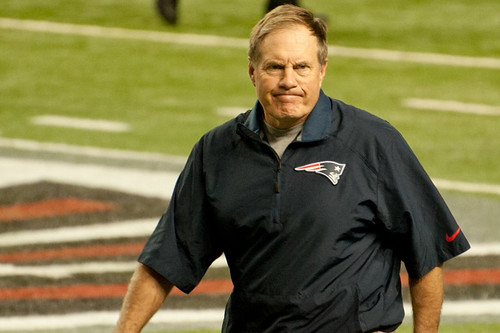
A couple of years ago the New England Patriots were on their own 28 yard line with 2:08 to play. They were up 34 to 28 on the Indianapolis Colts and it was 4th down and two. That would make for an easy decision, one may guess; you punt. But Patriots Head Coach Bill Belichick didn’t punt, he went for it.

Unfortunately for Coach Belichick and the Patriots, this seemingly brazen move backfired; the Indianapolis defense stuffed them. Two minutes later the Colts converted and the Patriots lost 35 to 34.
The news media and fans, both during and after the game, wanted Belichick’s head on a stick. They asked, "How could a coach who is supposedly so smart be so stupid? I mean really, you punt in that situation. It’s not even debatable."
It turns out Bill Belichick was not stupid, he was just playing the odds. In that situation, with hundreds of thousands of simulations, the play was to go for it because you’d win more often if you did. A supercomputer named “Zeus” at a Boston University confirmed it. Belichick was doing the right thing because he wasn’t playing a gut feel; he had access to and was playing the numbers.
Even with that piece of information, most sports writers, fans and commentators failed to believe it. Going for it in your own end just seems so wrong, so against convention, so against what we’ve always been taught in football, that is has to be wrong.
As horseplayers we fight similar feelings each day. A lot of us learn handicapping at a young age, and the things we learn – the “rules” - stick with us. We’re not sure they’re true, but they sound like they are. We’ve seen it happen, our friends talked about it, we read it in a handicapping book, or saw an analyst talk about it on a simulcast screen and we’ve cashed some tickets, too. It’s our “gut feel” and it has to be right.
Sometimes it isn’t.
I have a friend who will not bet rider Julien Leparoux if he is riding a speed horse on the turf. I think he saw him strangle a speed horse or two and said never again, or maybe because he is from “over there” he rides too patiently and is a toss out. No matter what the reason, he’s an “auto pitch” according to my friend. I don’t think he’s the only one who does that with Mr. Leparoux. On chat boards or on Twitter I see the same quite often.
Bill Belichick might ask, “but is he really that bad?”
Leparoux, on the green in 2013 (that rhymes), wins 17% of the time and his ROI is a solid 0.95. With “e” or “ep” tagged horses – the speed – my friend may expect a bad number, but Mr. Leparoux has clicked with 21% for an ROI of 1.10. With the top last race pace fig with a similar paceline in 2013, he wins at 27.2% and possesses a sparkling ROI of 1.19. With horses on the green with Quirin speed points of over 5, he wins at 27% and is also highly profitable.
So much for that theory, perhaps.
We all want to see some sort of recency in works for a horse who has been off a little while. One friend fades pretty much every horse off three weeks or more without a work. That is not going out on a limb and makes perfect sense. In fact, the numbers bear this out. In 2013, horses off no work and off 25 days or more have a lower impact value than those who are worked.
One day we’re discussing the third race at Belmont where trainer David Jacobson had a horse off 28 days with no works who was 5-2. “I think he is not hitting the board,” said my friend, as he walked to the virtual betting window to toss him out. Unfortunately for him, the horse ended up winning easily.
It turns out that conventional wisdom does not work with some trainers and David Jacobson is one of them. With no works, off 25 or more days, he’s hit with 7 of 22 starters for 31% (for about a flat ROI). His win percentage with all horses is around 24%. In a common sense situation where we should look elsewhere – in Belichick parlance, we should “punt” – we should actually be sitting the race out, or keying the horse in exotics.
Starters off extended layoffs is another fade for many handicappers. In the 1970’s and beyond, these horses, who are at times coming back off huge problems, won at a terrible win rate. They were the quintessential “auto pitch”. In modern horse racing they are still poor and win at a rate that is worse than average, but if they have a bullet work and a properly spaced worktab, horses off 300 or more days in 2013, have a 0.992 ROI and win 17% of the time. For some trainers, as you can see here, betting them can be extremely profitable.
Bill Belichick is a good coach and one of the reasons he is a good coach is because he is unafraid to buck convention, when bucking convention has some type of validity. Handicappers like me and you are playing against other handicappers – this game is “pari-mutuel” – and if other handicappers are all doing the same thing, it does not mean it’s necessarily correct. We need to be skeptical, yet wary; respectful of wisdom, yet curious. By channeling our inner Bill Belichick we can become better and more profitable horseplayers.
A couple of years ago the New England Patriots were on their own 28 yard line with 2:08 to play. They were up 34 to 28 on the Indianapolis Colts and it was 4th down and two. That would make for an easy decision, one may guess; you punt. But Patriots Head Coach Bill Belichick didn’t punt, he went for it.

Unfortunately for Coach Belichick and the Patriots, this seemingly brazen move backfired; the Indianapolis defense stuffed them. Two minutes later the Colts converted and the Patriots lost 35 to 34.
The news media and fans, both during and after the game, wanted Belichick’s head on a stick. They asked, "How could a coach who is supposedly so smart be so stupid? I mean really, you punt in that situation. It’s not even debatable."
It turns out Bill Belichick was not stupid, he was just playing the odds. In that situation, with hundreds of thousands of simulations, the play was to go for it because you’d win more often if you did. A supercomputer named “Zeus” at a Boston University confirmed it. Belichick was doing the right thing because he wasn’t playing a gut feel; he had access to and was playing the numbers.
Even with that piece of information, most sports writers, fans and commentators failed to believe it. Going for it in your own end just seems so wrong, so against convention, so against what we’ve always been taught in football, that is has to be wrong.
As horseplayers we fight similar feelings each day. A lot of us learn handicapping at a young age, and the things we learn – the “rules” - stick with us. We’re not sure they’re true, but they sound like they are. We’ve seen it happen, our friends talked about it, we read it in a handicapping book, or saw an analyst talk about it on a simulcast screen and we’ve cashed some tickets, too. It’s our “gut feel” and it has to be right.
Sometimes it isn’t.
I have a friend who will not bet rider Julien Leparoux if he is riding a speed horse on the turf. I think he saw him strangle a speed horse or two and said never again, or maybe because he is from “over there” he rides too patiently and is a toss out. No matter what the reason, he’s an “auto pitch” according to my friend. I don’t think he’s the only one who does that with Mr. Leparoux. On chat boards or on Twitter I see the same quite often.
Bill Belichick might ask, “but is he really that bad?”
Leparoux, on the green in 2013 (that rhymes), wins 17% of the time and his ROI is a solid 0.95. With “e” or “ep” tagged horses – the speed – my friend may expect a bad number, but Mr. Leparoux has clicked with 21% for an ROI of 1.10. With the top last race pace fig with a similar paceline in 2013, he wins at 27.2% and possesses a sparkling ROI of 1.19. With horses on the green with Quirin speed points of over 5, he wins at 27% and is also highly profitable.
So much for that theory, perhaps.
We all want to see some sort of recency in works for a horse who has been off a little while. One friend fades pretty much every horse off three weeks or more without a work. That is not going out on a limb and makes perfect sense. In fact, the numbers bear this out. In 2013, horses off no work and off 25 days or more have a lower impact value than those who are worked.
One day we’re discussing the third race at Belmont where trainer David Jacobson had a horse off 28 days with no works who was 5-2. “I think he is not hitting the board,” said my friend, as he walked to the virtual betting window to toss him out. Unfortunately for him, the horse ended up winning easily.
It turns out that conventional wisdom does not work with some trainers and David Jacobson is one of them. With no works, off 25 or more days, he’s hit with 7 of 22 starters for 31% (for about a flat ROI). His win percentage with all horses is around 24%. In a common sense situation where we should look elsewhere – in Belichick parlance, we should “punt” – we should actually be sitting the race out, or keying the horse in exotics.
Starters off extended layoffs is another fade for many handicappers. In the 1970’s and beyond, these horses, who are at times coming back off huge problems, won at a terrible win rate. They were the quintessential “auto pitch”. In modern horse racing they are still poor and win at a rate that is worse than average, but if they have a bullet work and a properly spaced worktab, horses off 300 or more days in 2013, have a 0.992 ROI and win 17% of the time. For some trainers, as you can see here, betting them can be extremely profitable.
Bill Belichick is a good coach and one of the reasons he is a good coach is because he is unafraid to buck convention, when bucking convention has some type of validity. Handicappers like me and you are playing against other handicappers – this game is “pari-mutuel” – and if other handicappers are all doing the same thing, it does not mean it’s necessarily correct. We need to be skeptical, yet wary; respectful of wisdom, yet curious. By channeling our inner Bill Belichick we can become better and more profitable horseplayers.
Tuesday, November 5, 2013
Not Providing Timely Track Information Impacts Horseplayers (and Others)
Don't tell anyone and please keep this between us, but I bet a couple of football games this past weekend. From Wednesday onwards I got the injury report, weather reports, and rumors and such regarding things that many I am sure would not like to be public, like the Richie Incognito affair.
I am pretty sure some fans want to know if the wind will be blowing on Sunday in Buffalo, but don't kid yourself, these things are out there for bettors. Gambling on football games is a big business. Although the legally bet numbers are fairly small, the total easily is estimated into the hundreds of billions of dollars. The league knows that, and so do you and I.
I also bet the Breeders' Cup this weekend.
On Friday we all adjusted our play at least a little bit. We had heard stories about kickback, about how outside speed was good on the dirt. We factored that in and we're big boys and girls; we deal with track bias all the time. As fans, on social media and other outlets, it didnt quite feel right. For horse owners who got a closer ready for a big race on a track that he or she would be compromised on, I am sure they were not very happy. This was not ideal for anyone in the sport, really; however, that's racing sometimes.
What caused many the most problem, was what happened overnight.
We heard "rumors" they were trying to slow down the track and make it more fair.
Joe told Pete they were watering more. Some guy on twitter said he thinks he saw them tear up the inside a little bit.
Pete told Susan, and Susan said "they want a track like this on big days so it won't change"
Larry and Janet agreed, but weren't sure.
Some believed Joe and some believed Susan. Some read the guy on twitter but said "I have to wait and see".
The next morning there was a carryover in the pick 5 pool. Bettors would bet up to $7 million dollars into that pool, which rivals what Vegas will take on the college football games that day. I could see what the weather and injury report was for Florida and Florida State. When putting together my pick 5 ticket to that large pool I had absolutely no idea what the track was going to be like. Should I key the speed like yesterday? Are the rumors true so I should use the Romans closer in the Juvy fillies? I really don't know because no one is saying anything.
Where was a press release? Where was a mini-press conference with the track super? Beuller?
Where was a spokesman saying something simple like "we've had a dry season here and kickback is a bit of an issue. We heard horsemen and jockey complaints and some from customers, so we worked on the track all night. We can't guarantee it will be more fair to closers today, but we are trying to make it so, so for those betting upwards of $100 million dollars today, plan your wagers accordingly."
Was that too much to ask?
Ideally our tracks for big days would be fair surfaces - fair for jocks, trainers, owners and the fuel that makes the sport go: Wagering. That might be wishful thinking. But there is no excuse not to give information in a timely manner to everyone at an event regarding track maintenance. It's what professional gambling businesses do as a way of doing business. Horse racing should as well. It's a gambling game, not a hobby.
Related: John Pricci : Track Bias Unfair to Horses, Horsemen and Bettors Alike
I am pretty sure some fans want to know if the wind will be blowing on Sunday in Buffalo, but don't kid yourself, these things are out there for bettors. Gambling on football games is a big business. Although the legally bet numbers are fairly small, the total easily is estimated into the hundreds of billions of dollars. The league knows that, and so do you and I.
I also bet the Breeders' Cup this weekend.
On Friday we all adjusted our play at least a little bit. We had heard stories about kickback, about how outside speed was good on the dirt. We factored that in and we're big boys and girls; we deal with track bias all the time. As fans, on social media and other outlets, it didnt quite feel right. For horse owners who got a closer ready for a big race on a track that he or she would be compromised on, I am sure they were not very happy. This was not ideal for anyone in the sport, really; however, that's racing sometimes.
What caused many the most problem, was what happened overnight.
We heard "rumors" they were trying to slow down the track and make it more fair.
Joe told Pete they were watering more. Some guy on twitter said he thinks he saw them tear up the inside a little bit.
Pete told Susan, and Susan said "they want a track like this on big days so it won't change"
Larry and Janet agreed, but weren't sure.
Some believed Joe and some believed Susan. Some read the guy on twitter but said "I have to wait and see".
The next morning there was a carryover in the pick 5 pool. Bettors would bet up to $7 million dollars into that pool, which rivals what Vegas will take on the college football games that day. I could see what the weather and injury report was for Florida and Florida State. When putting together my pick 5 ticket to that large pool I had absolutely no idea what the track was going to be like. Should I key the speed like yesterday? Are the rumors true so I should use the Romans closer in the Juvy fillies? I really don't know because no one is saying anything.
Where was a press release? Where was a mini-press conference with the track super? Beuller?
Where was a spokesman saying something simple like "we've had a dry season here and kickback is a bit of an issue. We heard horsemen and jockey complaints and some from customers, so we worked on the track all night. We can't guarantee it will be more fair to closers today, but we are trying to make it so, so for those betting upwards of $100 million dollars today, plan your wagers accordingly."
Was that too much to ask?
Ideally our tracks for big days would be fair surfaces - fair for jocks, trainers, owners and the fuel that makes the sport go: Wagering. That might be wishful thinking. But there is no excuse not to give information in a timely manner to everyone at an event regarding track maintenance. It's what professional gambling businesses do as a way of doing business. Horse racing should as well. It's a gambling game, not a hobby.
Related: John Pricci : Track Bias Unfair to Horses, Horsemen and Bettors Alike
Subscribe to:
Posts (Atom)